Monte Albán: guide, ticket and transport from Oaxaca
Updated October 28, 2026 · 4 min read
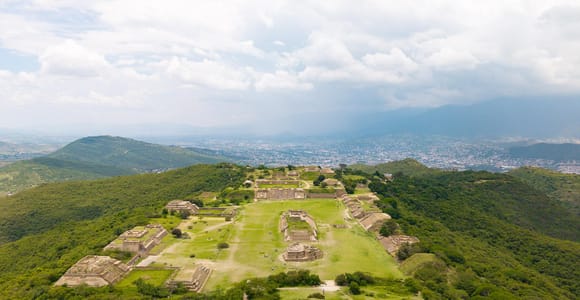
Monte Albán is close enough to Oaxaca for a half-day, but the mountaintop site rewards more than a quick photo stop. INAH currently lists opening every day from 8 a.m. to 5 p.m., with last access at 4 p.m.. Its published admission is MXN 105 for Mexican visitors and MXN 210 for foreign visitors. These are official site charges and can change; check INAH before travelling.
Why a guide changes the visit
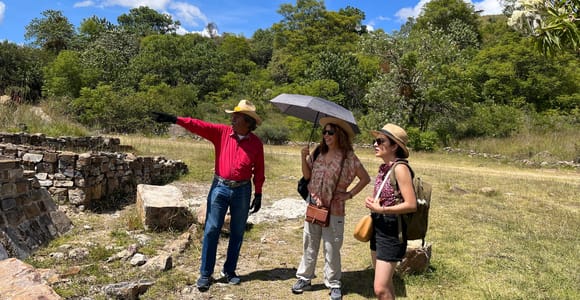
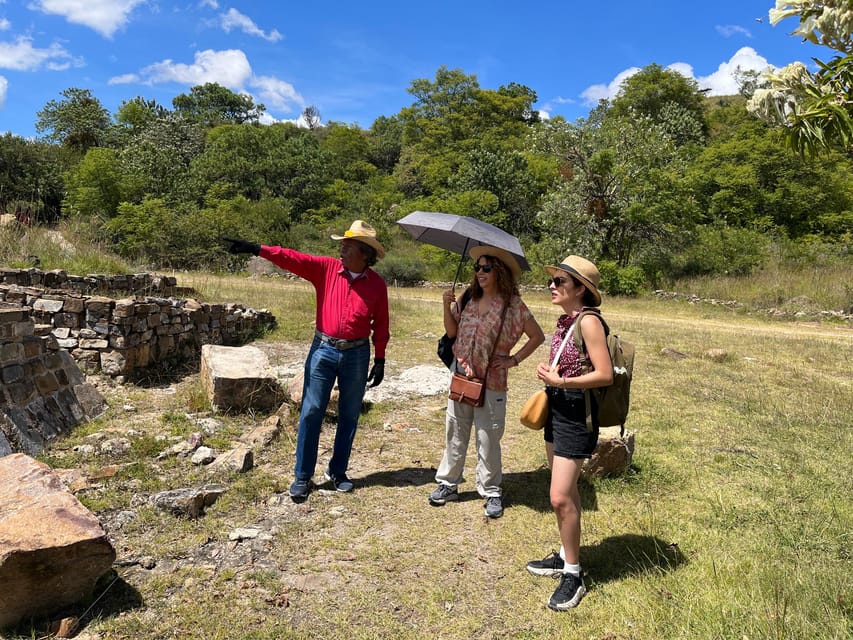
Without a guide you can identify the Great Plaza, the ball court, Los Danzantes and Building J from signs and a map. What is harder to read is why the Zapotec city was levelled across a mountain ridge, how its monuments mark political power, and how later Mixtec use fits into the story. A good guide supplies that structure. A poor guide merely points at stones, so ask whether guiding and admission are included.
The four-hour Monte Albán half-day tour combines transport with a guided archaeological visit. It is the sensible default for first-time visitors who want context without giving up the whole day. Independent travellers gain freedom to stay longer in the site museum and pause on the platforms.
Ticket and timing
Buy through the official INAH channel if you visit independently. The site museum is included in the archaeological-zone admission, according to INAH. Arrive near opening for cooler walking and clearer views; shade is limited across the exposed plaza. Food and pets are not allowed inside, and smoking is prohibited. Toilets, parking and a restaurant are listed among the services.
Getting there from Oaxaca
Monte Albán lies on the ridge west of the city. A tour handles the climb and return. Taxis are flexible but agree the return arrangement rather than assuming a car will wait. Shuttle services change, so confirm their current departure point locally. Driving is straightforward compared with Hierve el Agua, but the visit itself includes uneven stone and stairs.
Who should choose what
Choose the guided half-day for historical context and simple logistics. Go independently if you read Spanish comfortably, want the museum at your own pace or plan to combine the site with nearby Atzompa. In either case, allow time to look back across the valley: the city’s position is part of the explanation, not just a backdrop.